
I had a lovely reading yesterday at Interlochen Arts Academy. There’s so much energy in being with other writers. A roomful of them is like an explosion. I felt that way, too, when I was teaching at the Rainier Writing Workshop. It’s why people of like mind like to be together. I thought for today’s Wobbly I would give you a prose poem. I’m working on another book of them. Who knows why this form is working for me now? That’s the thing. When you’re writing, you’re being led by something other than the rational. Not that the rational isn’t involved. But it’s not steering the ship.
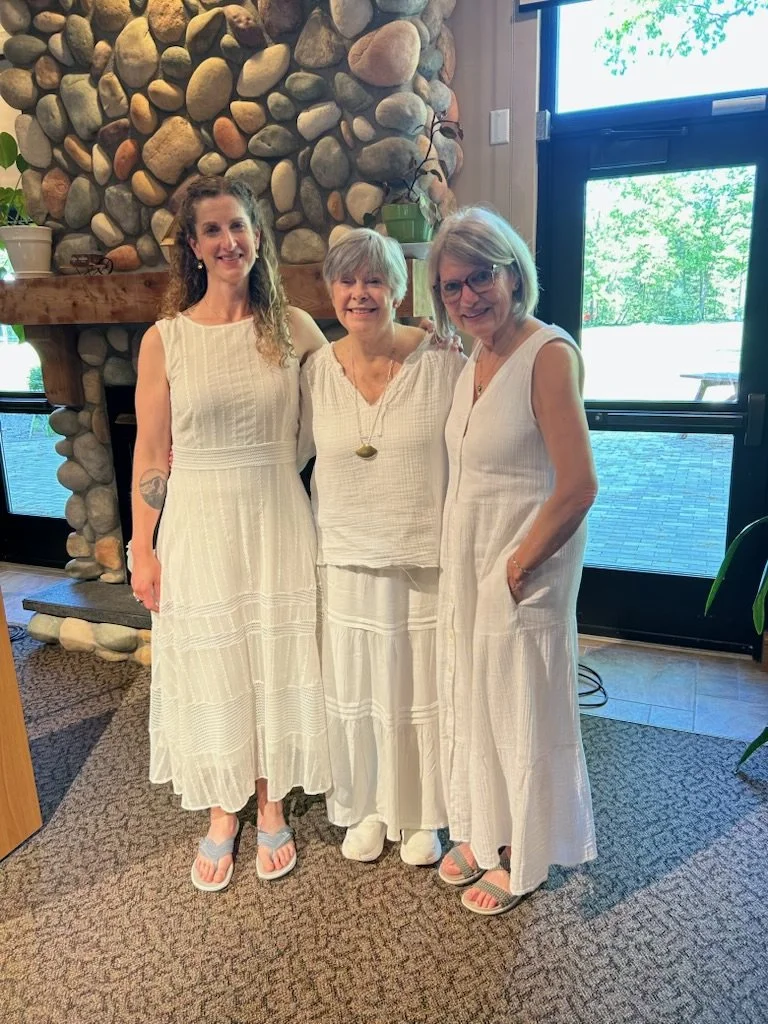
Katey Schultz, me, and Ann Marie Oomen, dressed as suffragettes on the week Congress passed the 19th Amendment.
Antennae
Ezra Pound once described artists as “the antennae of the race.” I took Tylenol last night because I couldn’t sleep. I never know if it’s pain or what, but then I can go to sleep. My antennae gets waving in the dark and gathering up all sorts of signals. I try to attend to them, but there are so many. I once said to Jerry that I think writers, especially poets, have no skin. He said, that’s elitist. Well, I said, the issue is probably that it’s the skinless ones who do the writing. If you have plenty of protection already, maybe you don’t need to wrap yourself in words to keep warm. As for antennae of the race, I think there are a zillion lately. Commentary on commentary. Poetry doesn’t seem to care for all that. I think of poetry as living underground, waving its little feelers to find its way along.
True or not, elitist or not, there are always the zillion nerve endings. Life is hard for a writer, but life is hard for everyone who isn’t shut down. Just because life is hard doesn’t mean it’s not amazing, wonderful, and full of love and excitement. All at the same time.
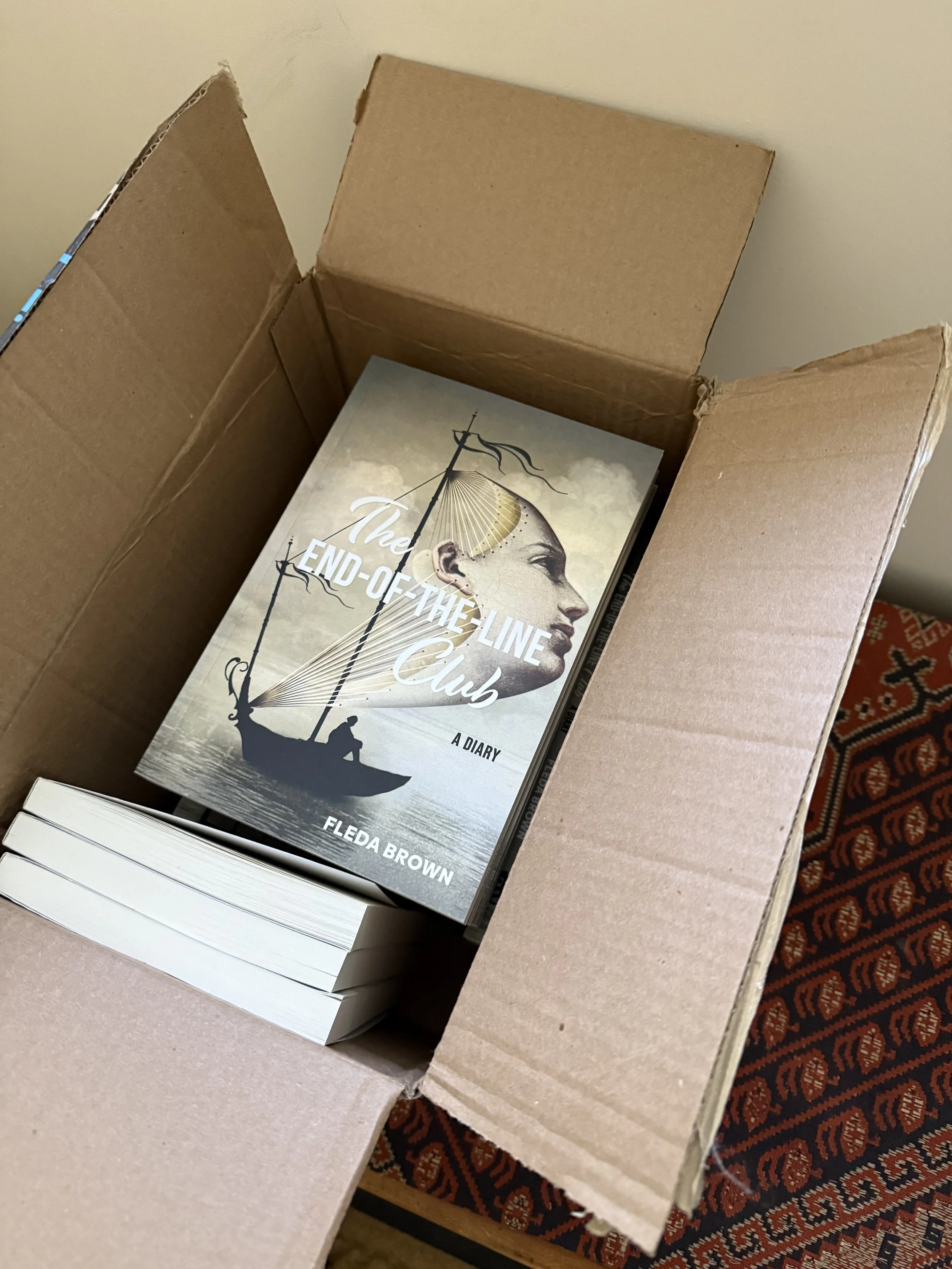
The End-of-the-Line Club has arrived! Today is launch day! You can buy the book now, in bookstores. I have had bookmarks made that have the link to our website, all still developing. It seems that this late in my career I am into a new “career,” helping those who also find themselves, surprise (!) old and trying to figure out what’s next. It’s very exciting.
So how can one “help” with this? The same way we help with most things, I think. We tell our stories. No amount of teaching can compare with hearing how it was for one person.
The book—and the project that’s growing around it—a newsletter, a future podcast and more are detailed at a new website dedicated to that purpose. For example, the first issue of the EOTL Newsletter includes a new poem by Ted Kooser, a special writing prompt feature, my musings and much more.
The focus is on adjusting to aging, something we all encounter if we’re lucky, and what that means based on the ideas in my book. It’s for those of us who are already there and all the rest who I hope will be. The End-of-the-Line Club (the book and the project springing from the book) is really all about working it out, your way. I’m hoping to offer a different kind of conversation, both personal and also supported by physicians, gerontologists and poets.
The premiere issue of the EOTL Newsletter comes to inboxes monthly starting mid-June. It’s free. You can join me as we explore all the possibilities---both practical and creative. Subscribe here:
Find out more. Here’s the new website: https://endofthelineclub.com/
Back to Interlochen: after only two days here, I’m awash with stories, some “true” and some “not true.” But every bit as much true to the human heart, as Hawthorne said in his prefaces to his romances.
“Antennae” hardly feels like a poem. What I aspire to lately is a group of words, clinging together, that seem to come very directly to the page, with minimum interference. Meaning, you may feel as if it hasn’t been “constructed” at all. It comes as close as I know how to do, at this stage of my writing, to appear to have emerged, uncomplicated by rules or the history of poetic forms. Why is this important? Maybe something to do with the times we live in. As if there’s no time now for getting dressed up or applying makeup. Things are dire.
Even so, there are poems about trees and flowers and birds. Even so, there are poems about personal heartbreak. But underneath them, you may feel an urgency. I do. I feel an urgency in my little prose poems. But of course—and you writers know this—there’s a careful consciousness to what we write. It’s not just blather on the page.